
Preparing Keeldragger for Nearly 12,000 Nautical Miles
Because the Ocean Doesn't Care If You're Almost Ready

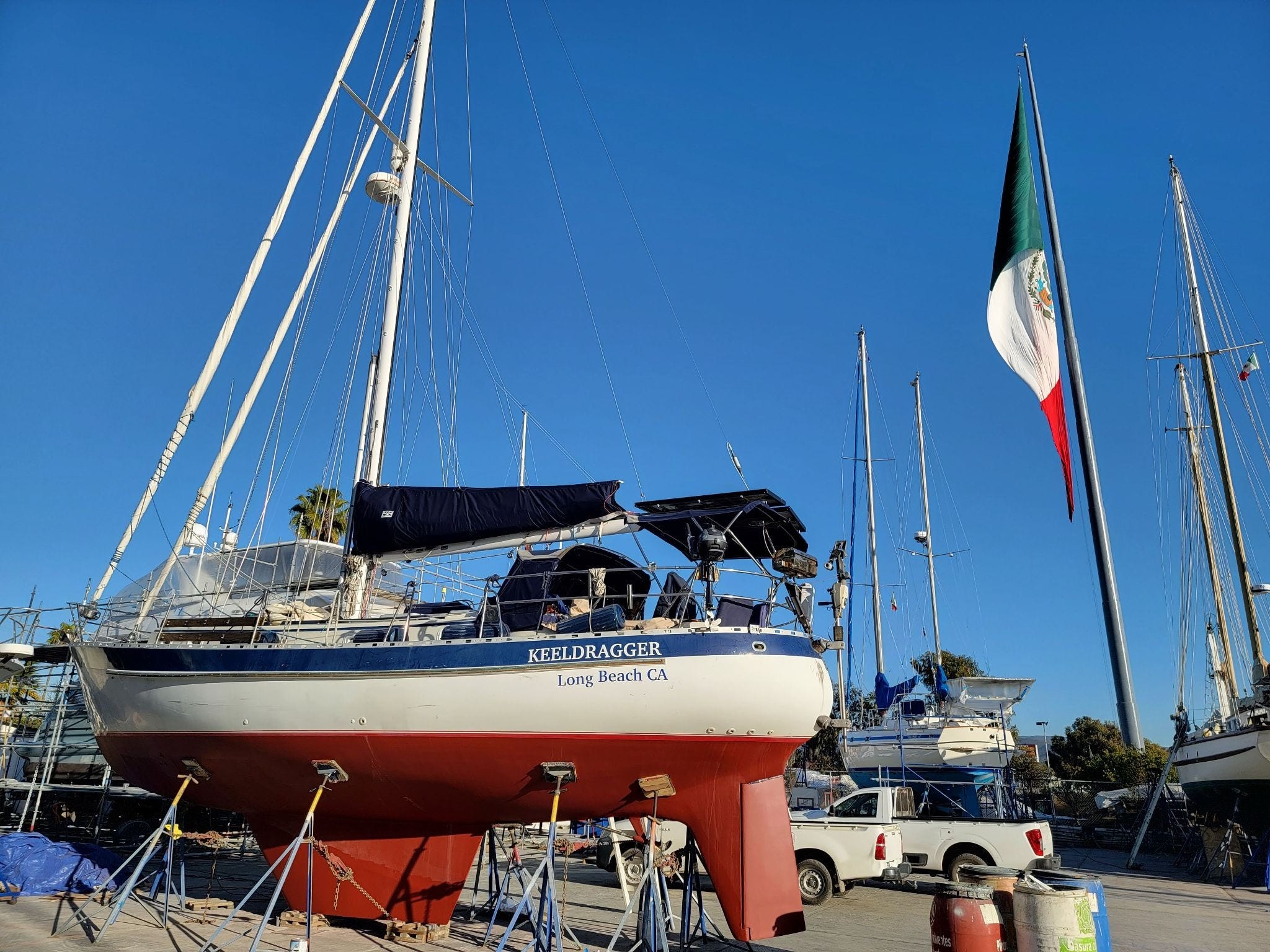
In 2019, I purchased Keeldragger V — a 1989 Texas-built Valiant 40. Choosing her was equal parts dream and deliberate calculation. The Valiant 40 has a well-earned reputation as a serious offshore passagemaker, and this particular boat was going to carry me across the blue-water passages I’d spent decades imagining. From the moment I signed the papers, we had a contract: I would invest everything I had into maintaining and upgrading her, and she would take care of me across vast oceans and remote anchorages far from any help.
I often write “we” in my logbook, which sometimes causes confusion when people realize I’m often singlehanded. But I want to give Keeldragger the credit she deserves. This isn’t about romanticizing a fiberglass hull — it’s about a genuine partnership with a vessel I’m trusting with my life. So I’ll continue to use “we,” “us,” and the occasional “she” and “her.” She’s earned it.
What I Bought — and What Lay Ahead
Keeldragger arrived in good bones. She was free of the hull blister problems that plagued earlier Valiants and came reasonably well-equipped. But a serious refit was waiting.
The standing rigging was original, apart from two cap shrouds replaced during truck delivery from the East Coast. The Volvo Penta 2003T diesel was approaching 5,000 hours — not necessarily a death sentence, but a number that demands attention before crossing an ocean. Both the fresh water tank and the holding tank were leaking. The Hydranet cross-cut main needed replacing, and while the yankee and staysail were serviceable, I wasn’t confident enough in their condition to take them offshore. The windlass motor had failed and needed a complete rebuild. On the brighter side, the Rocna anchor and 300 feet of ⅜” BBB chain were in solid shape.
The electronics were dated: old Standard Horizon chartplotters, Raymarine legacy SeaTalk instruments, and a green-screen Raytheon radar that was invisible from the helm. The autopilot was an Alpha 3000 paired with an older Raymarine course computer — functional, but not the system I’d want driving the boat through a Southern Ocean squall. The four 125Ah AGM house batteries were at end of life.
Five Years of Sea Trials in Disguise
After delivering Keeldragger from La Paz, Mexico in early 2020, I spent the next five years cruising Southern California, the Channel Islands, and Northern Baja — two or three weekends a month, with longer stretches worked around my job in big tech. My goal was fixed even when the timeline wasn’t: retire early and sail to the South Pacific. I was obsessed and terrified in equal measure. I knew that once I left familiar waters, I’d be entirely at the mercy of the sea. Every trip to Catalina, the Northern Channel Islands, and Ensenada became a de facto sea trial, and every sea trial informed the upgrades ahead.
The First Attempt — and Why It Didn’t Happen
By 2022, I was ready to pull the trigger. I’d upgraded the house banks to LiFePO4, refreshed much of the electronics, added a UK Lazy Cradle stack pack, bought a new dinghy, and replaced the failed windlass with a Lofrans Tigres. There were still items on the list, but I was close enough. Then I discovered the v-drive transmission was leaking oil.
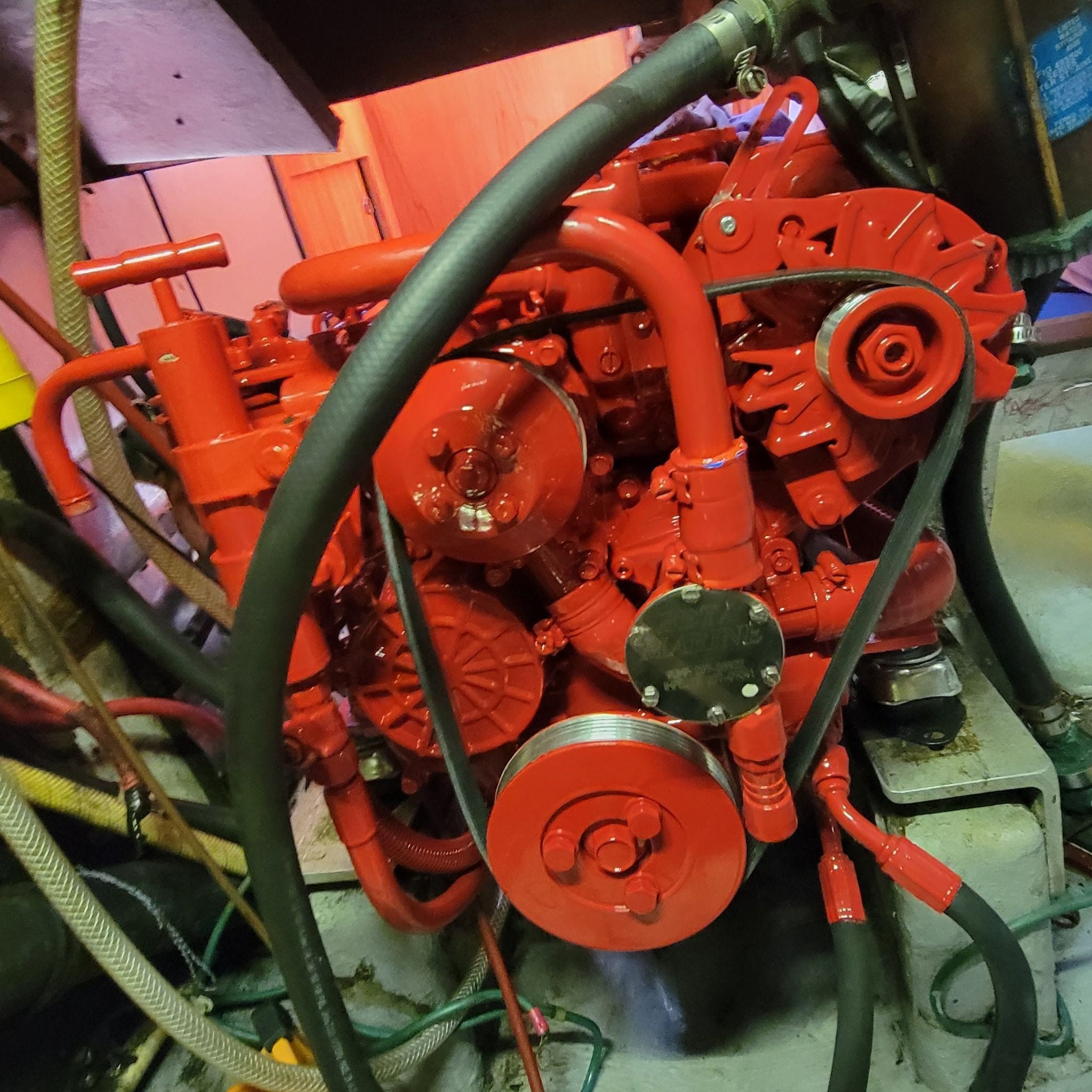
Inspection revealed worn seals and bearings. Worse, the unit hadn’t been manufactured in 20 or 30 years — Volvo Penta had no parts. Paired with 5,000 hours on the engine, the risk was simply too high to accept. I decided to repower.
I put a deposit on a new Beta 35 mated to a ZF 15 MIV v-drive. Then the pandemic supply chain crisis hit in full force, and delivery was pushed ten months out. After a four-month hiatus, I went back to work. I chose to see it as a gift: a funded window to finish the refit properly, without cutting corners.
The Refit in Full
Over the next two years, I completed the repower and undertook a systematic, top-to-bottom overhaul of every major system on the boat. The goal wasn’t perfection — it was confidence. I needed to be able to handle whatever the sea threw at us, far from any marina, chandlery, or rescue service.
Standing Rigging and the Mast
The original rod rigging gave way to compacted strand wire for the stays and shrouds. The backstay and fixed intermediate backstays went to Dyneema — lighter than rod, and critically, far easier to source or field-repair in remote anchorages where rod fittings simply don’t exist. The modest weight gain from wire over rod was offset by the Dyneema savings aloft.
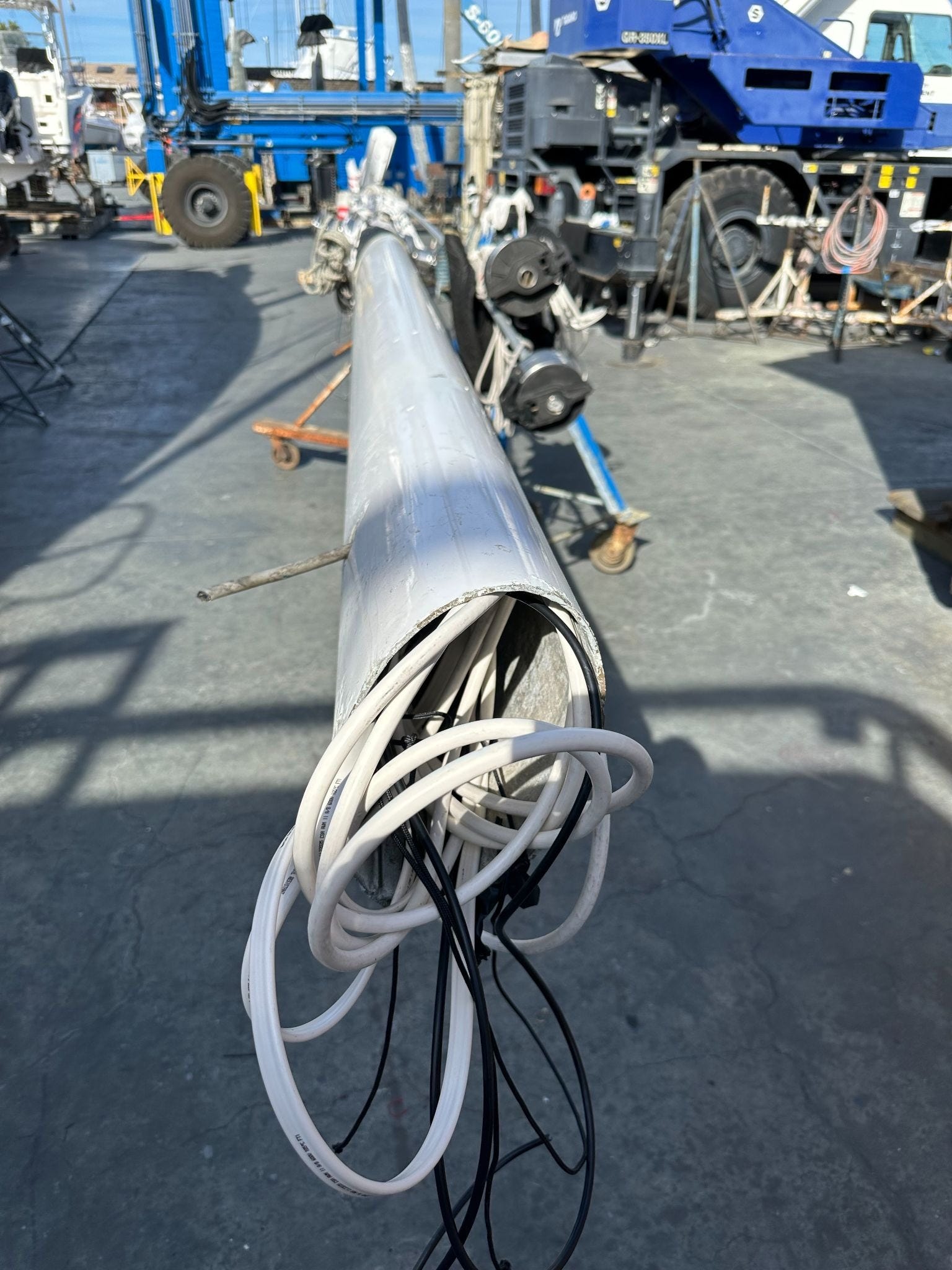
When the rigger pulled the mast, he found minor corrosion at the base and a crack in the mast step. The mast step was welded and re-anodized. He cut the bottom two inches off the mast and built up the step with G10 fiberglass board and epoxy. While all the lights were working, we took the opportunity to rewire the entire mast and install new LED lighting throughout.
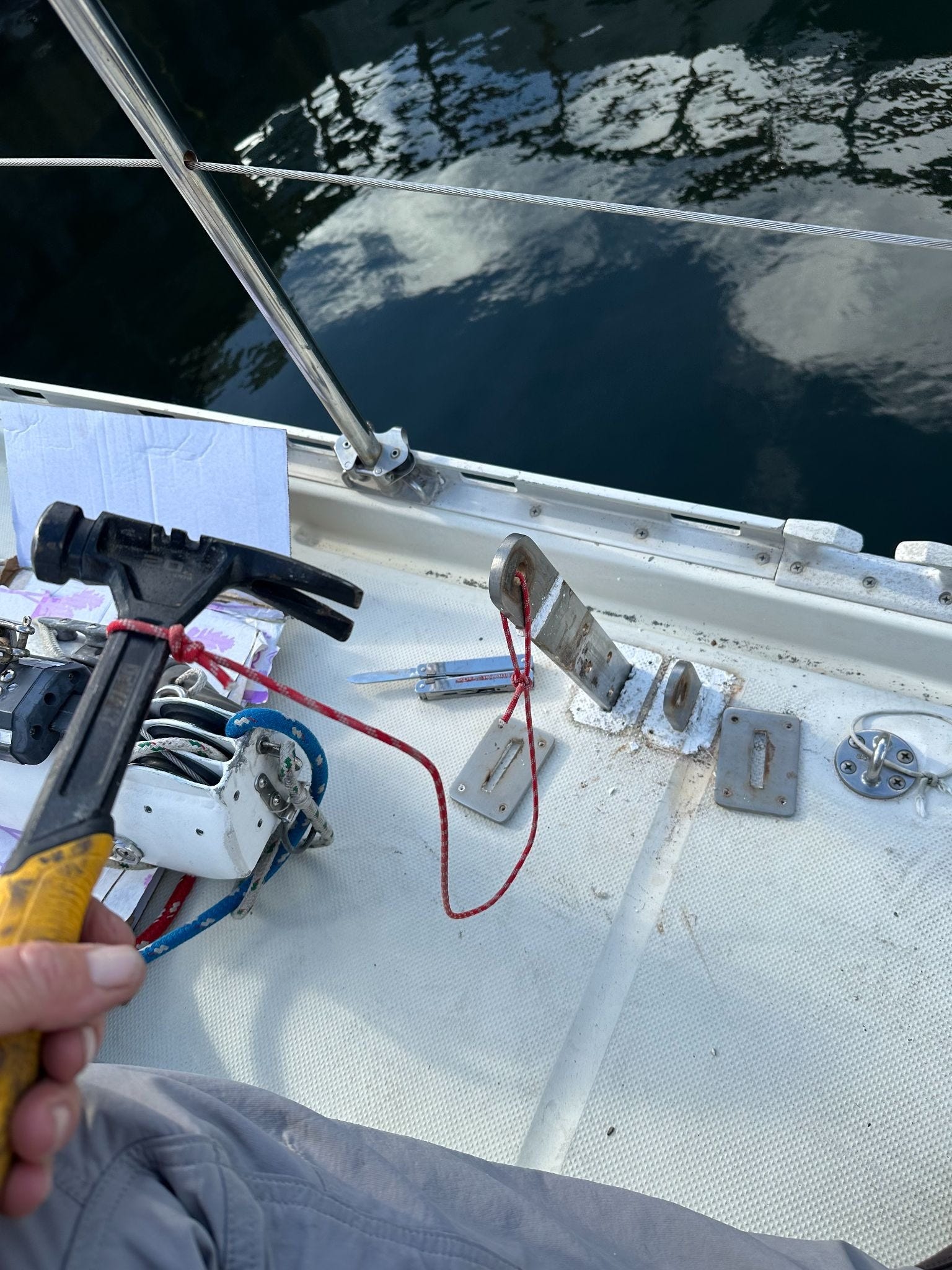
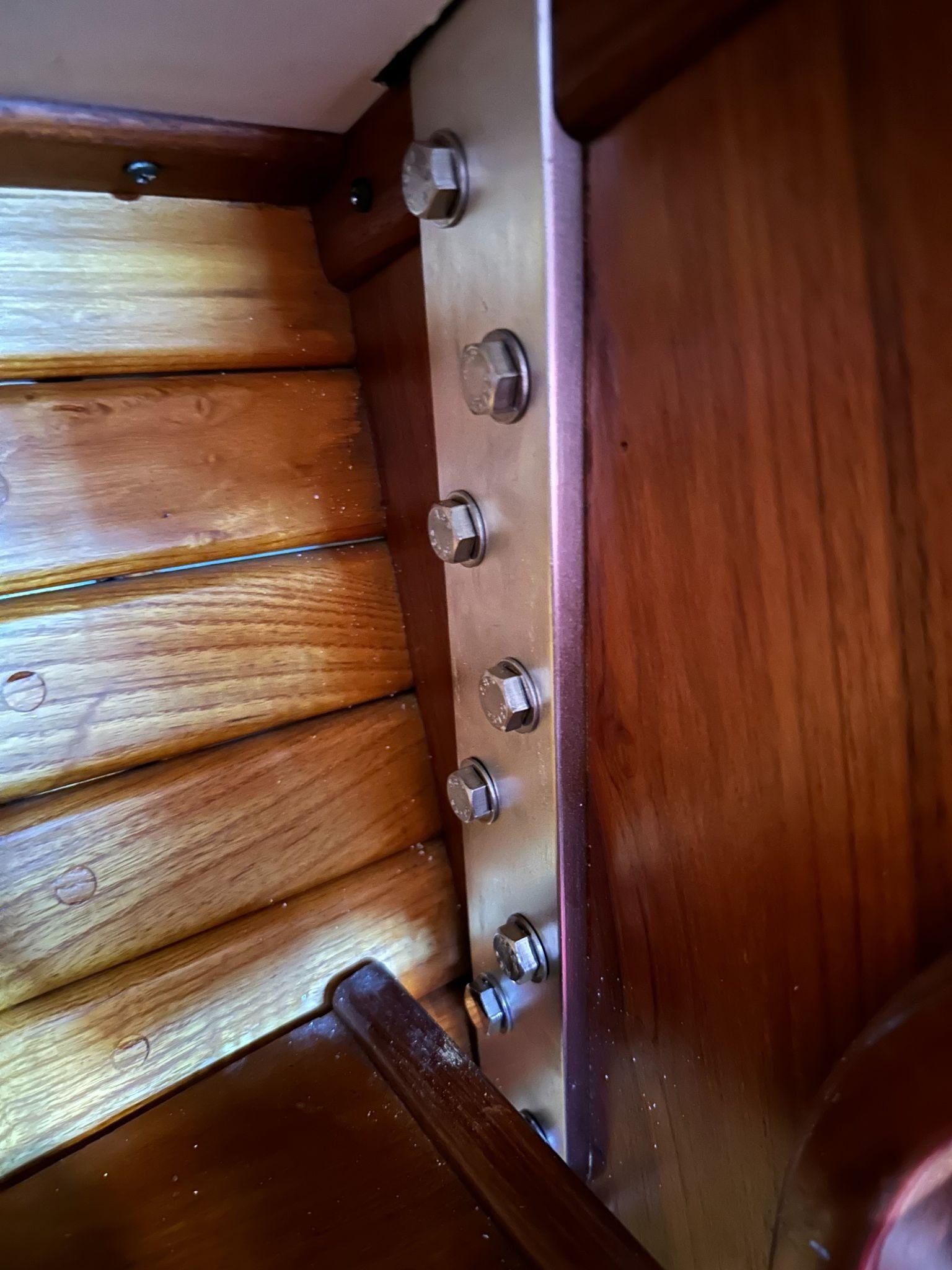
The chainplates looked fine from the deck and from below — but “looking fine” isn’t good enough when you’re 1,500 miles from the nearest port. The critical zone is where chainplates pass through the deck, where moisture intrusion can cause hidden corrosion that fails without warning. The rigger pulled them all. Everything looked solid except for the inner forestay chainplate, which was replaced entirely. The others were electropolished and reinstalled.
Life Raft
The life raft was overdue for service — by about a decade, with its last inspection logged in 2013. I half-expected Viking to condemn it. The service tech reassured me: smaller Viking liferafts almost never fail inspection, and if they leak, it’s typically an easy fix. It passed. One more item I could cross off with genuine confidence.
Sails
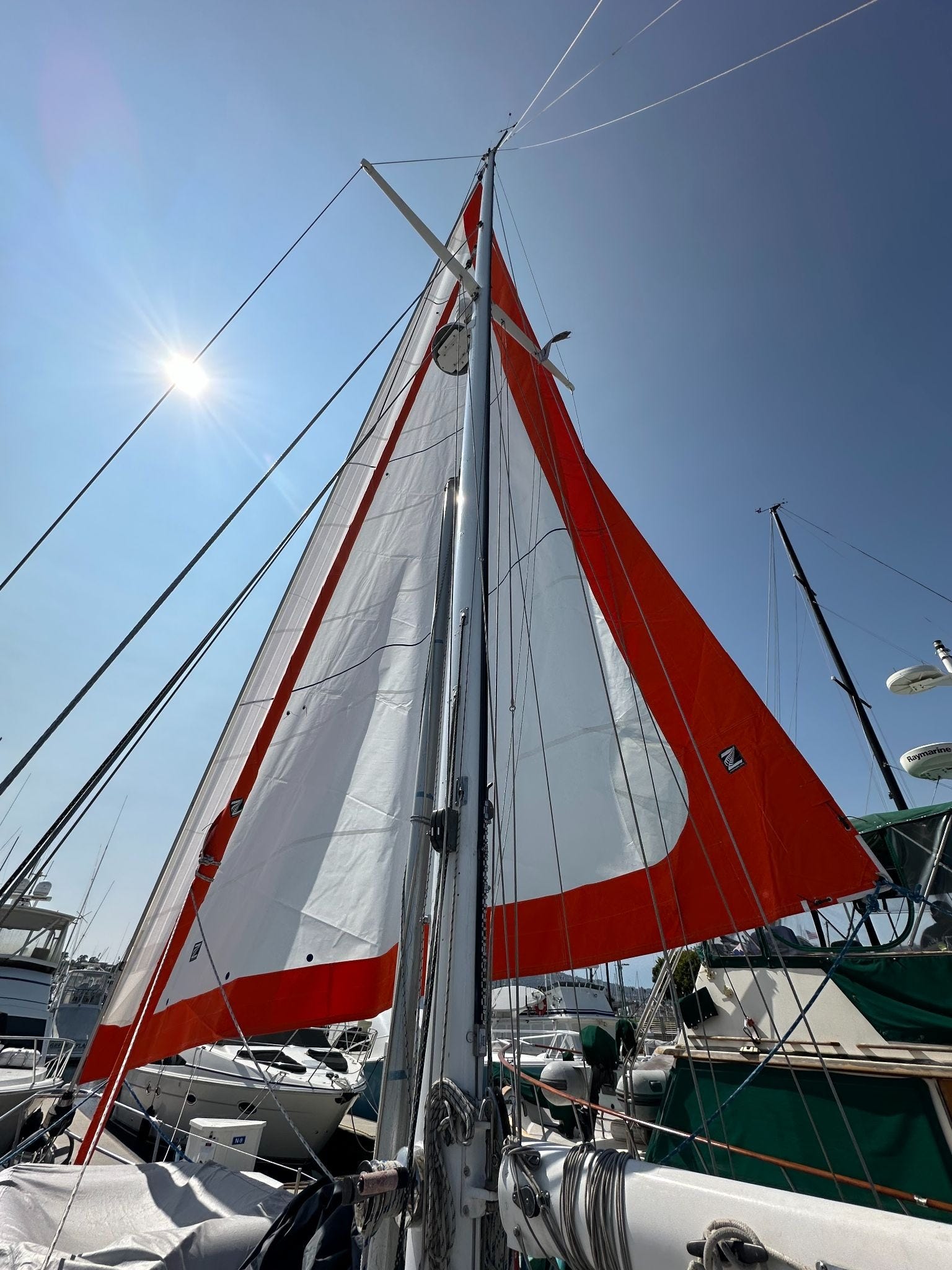
I wanted bulletproof offshore canvas without the risks of laminate construction — laminates can mildew and delaminate in tropical heat and UV, exactly the conditions I was heading into. After pricing cruising Dacron and woven Dacron/Dyneema blends, I chose Hydranet Radial for the main: full battens, three deep reefs, with Reef #3 designed to function as a de facto storm trysail. (I do carry a dedicated storm trysail, but its slides aren’t compatible with the Tides Track & Slide system I installed to simplify raising and dousing the main.)
For the genoa and staysail, I chose Nautosphere Voyager — a crosscut Dacron with Dyneema fibers, a proprietary weave that comes off the loom notably stiff. Ideal for headsails on furlers that need to hold their shape under load. On genoa size, I went back and forth: stick with a ~97% yankee, or go larger for more downwind sail area? My 135% is a handful in building breeze. I settled on a 120% — large enough for good speed and pointing angles, with a wide enough wind range before furling becomes necessary.
Power Systems
The LiFePO4 conversion I’d done earlier required a complete supporting ecosystem: a DC-to-DC charger, an external alternator regulator, an upgraded shore charger, and revised MPPT solar charge profiles. I’d had two 125-watt panels on the bimini. Thanks to advances in panel efficiency, I replaced them with two 250-watt panels in the same footprint and added a 200-watt flexible panel over the dodger — bringing total installed solar to 700 watts. The dodger panel runs in partial shade from the boom, so real-world yield is somewhat less, but the overall system now delivers roughly 500Ah of usable capacity versus the 250Ah I had with AGM. Under normal conditions, solar alone covers most of our energy demands. Auxiliary charging is really only needed after successive cloudy days or extended Starlink use.
Windvane
The original Hydrovane had likely gone unused for most of the decade before I owned Keeldragger — you don’t need a windvane for coastal hops where an electronic autopilot handles most conditions. But for long offshore passages, a reliable, mechanical windvane is not optional. I replaced the original with a new unit: larger rudder for more control authority, a beefier shaft, and upgraded control head. Expensive? Yes. Overkill for some? Maybe. But it gave me the kind of confidence that only comes from knowing a critical system is new and proven.
Plumbing
Plumbing got a thorough going-over: new pump assembly for the head, new holding tank hoses, a weld repair on the fresh water tank, a new shower sump pump, and a high-capacity bilge pump with its own dedicated switch and high-water alarm. None of it glamorous. All of it essential.
Spares and Consumables
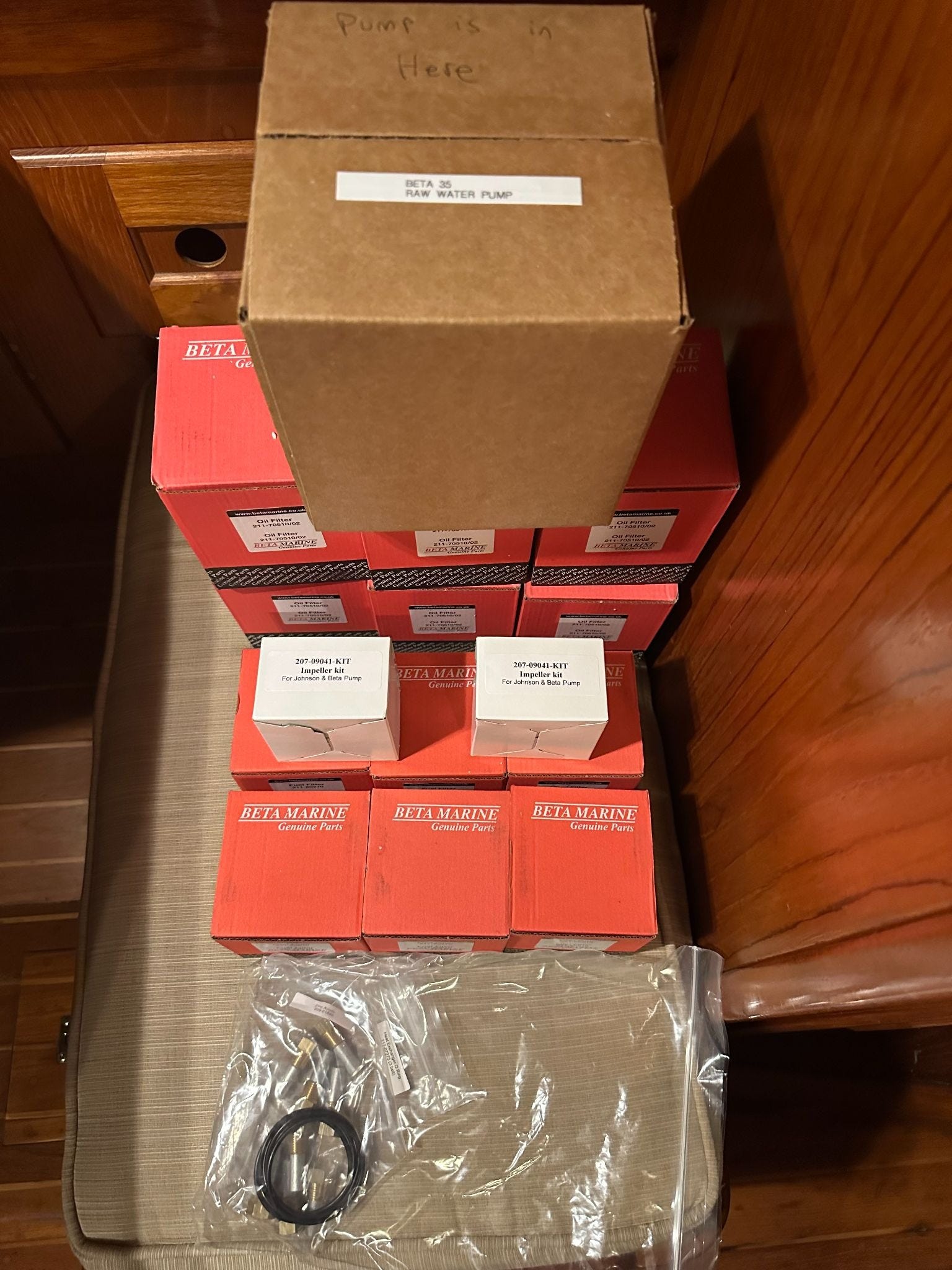
I stocked engine spares methodically — primary and secondary fuel filters, oil filters, raw water impellers, a spare raw water pump, spare starter motor, belts, heat exchanger O-rings and zincs, prop and shaft and hull zincs, engine and transmission oil, and dozens of smaller components. The watermaker spares inventory included scores of filter replacements, pickling solution, and descaling chemicals. The philosophy was simple: assume I will need it, assume I won’t be able to buy it, and carry it.
Electronics
The entire nav electronics system was rebuilt around a new NMEA 2000 backbone. The end result: B&G 12-inch Vulcan chartplotters at the helm and nav station, a Si-Tex AIS transceiver, a Standard Horizon VHF with AIS receive at the nav station and a remote at the helm, NMEA 2000 depth/speed/temperature/wind instruments, a cluster of three B&G Triton2 displays under the dodger, a Simrad HALO 20+ radar, an Iridium Go for satellite comms and weather, a PredictWind Datahub for tracking and wireless connectivity, and a Starlink Gen 3 for high-speed internet offshore.
Ready — As Ready As You Can Be
When I finally set my retirement date in the fall of 2024, I was confident that Keeldragger was as prepared as I could make her. Not perfect — no boat is, and the sea has a way of exposing whatever you missed. But she was solid, redundant where it mattered, and stocked for self-sufficiency across blue water and remote anchorages where help is measured in days, not minutes.
I’d done everything I could to reduce the risks. I knew headwinds, gear failures, and situations I hadn’t imagined were still ahead of us. That’s sailing. What I needed wasn’t certainty — it was the confidence to go anyway.
The boat was prepared. I was still wrapping my head around the magnitude of what lay ahead.
Mark,
Thank you for sharing this segment of your fantastic journey.
This record of transforming Keeldragger V into the competent offshore seaworthy vessel provides a look as to how you personally do not rely on "luck" to get safely home; whether it be coastal journey or the epic 12,000 dream navigation.
Here you can find details of our experience… https://yachtlounge.substack.com/p/secret-ocean-the-journey-that-changed?r=625z2l&utm_medium=ios